Wednesday, September 15, 2010

What's In YOUR Business Card Holder? - Simple Strategies to Differentiate Your Business Cards from the Rest!

Readers,


Here is another great article from the Chronicle of Higher Education titled, "Hacking Your Business Card". 


I used the university business cards for awhile, but I wanted to make myself stand apart from the rest of the faculty who attend research conferences. So, I logged on to Office Max and created some GREAT business cards with their online software. 


I chose purple and white (my university's colors) and I chose to include the logo. They were very professional and Office Max runs a LOT of sales on business cards!


In addition to regular information, I decided to include my Twitter and Yahoo IM information.


What's on YOUR business card?


Millennial Professor - Jennifer T. Edwards, Ed.D.

Tuesday, September 14, 2010

Your Curriculum Vitae - Common Questions


Readers,


As faculty, (adjuncts, instructors, professors), etc., do you have a CV (curriculum vitae) to record your accomplishments, service, and teaching records? How often do you update your vitae?


One of the commonly asked questions in higher education is about the length of the vitae. According to an article in the Chronicle of Higher Education, "Creating and Maintaining Your CV", the average CV is three (postdoc) to 20+ pages (senior professor).


Currently, my CV is 13 pages and I have all of my presentations and publications listed. Is this too much? Should I include all of my presentations? Until told differently by one of my mentors, I will keep my CV in its current state.


According to the Chronicle of Higher Education article, people should include the following pieces of information.

  • Contact Information (email, postal address, telephone)
  • Education (list all of your degrees including undergraduate)
  • Professional Employment (list all of your positions, with dates and ranks)
  • Research Experience (might be subdivided into publications, presentations, grants, etc)
  • Teaching Experience (might be subdivided into courses taught, theses supervised, curriculum development, etc)
  • Honors and Awards
  • Professional Service (might be subdivided into Department, College, University, Professional Organizations)
What items should you include and what items should you exclude?


Sincerely,


Millennial Professor - Jennifer T. Edwards, Ed.D.

Monday, September 13, 2010

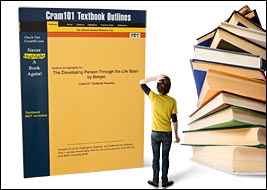
Cram101 - Barnes & Noble - A Review


Readers,

As a big fan of Cliff Notes for literature courses in college, I thought that these small yellow books were a great idea for "revisiting books" if a person does not have time to read the novel again.

However, college textbooks are a DIFFERENT animal. Most college textbooks are 300 - 400 pages long and most instructors only include a percentage of the chapters on their syllabus and in their classes. With the reduction in the number of chapters assigned in a class, why would a student need Cram 101 (Cram101 - Barnes and Noble)?

Textbook companies produce an array of resources for their consumers! MOST of these resources are FREE.

However, I know that some students will LOVE this product. In fact, as a college student (a few years ago), I probably would use this same product to check my knowledge of the book. In fact, I would probably have purchased several of these books with my friends and swapped these books back and forth.

What do you think? Would your students use this product?

Millennial Professor - Jennifer T. Edwards, Ed.D.

Friday, September 10, 2010

OpenStudy - An Online Study Group for College Students

Readers,

I realize any of you teach courses online and these courses consist of students from around the world! It would be GREAT if they could all meet at one location and "study" together, wouldn't it?

Well, now they can! Here is a website that will enable students to "study" together online.

Check it out! Let me know what you think? Do you already use this in your classroom?


Millennial Professor/Dr. Jennifer T. Edwards